Abram
Named in recordNamed as father on Izrael Dawid's Łódź register card
Family research dossier · Żelechów — Warsaw — Łódź — Dzierżoniów
העפנער · געפנער
A working archive for the line of Avraham Yitzhak Hepner, a Kohen buried in Warsaw in 1933, and Majer Gepner, born in Łódź in 1918. It holds the original family photographs and separates what the records say from what we still assume.
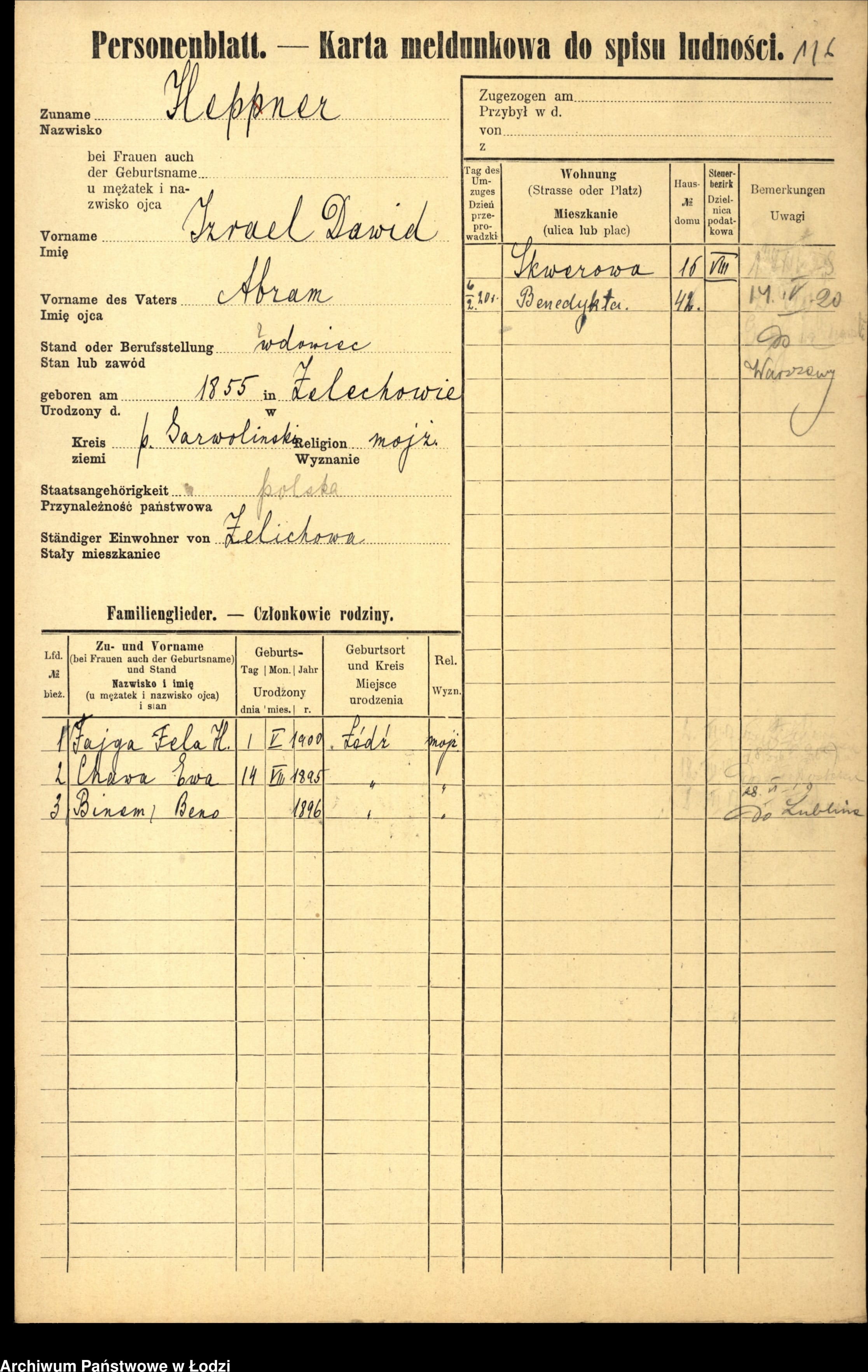
The strongest documented line begins with Avraham Yitzhak Hepner, buried in Warsaw in 1933, whose gravestone names his father as Israel David. A card in the Łódź population register of 1916–1921 records an Izrael Dawid Hepner, born 1855 in Żelechów, son of Abram — a widower living in Łódź with three children, Fajga, Chawa/Ewa and Binem, the names the family knows as Avraham Yitzhak's siblings — who left for Warsaw in June 1920. That makes him the probable father; a document naming the son is still to be found.
Named as father on Izrael Dawid's Łódź register card
Probable father of Avraham Yitzhak
Kohen · son of Israel David
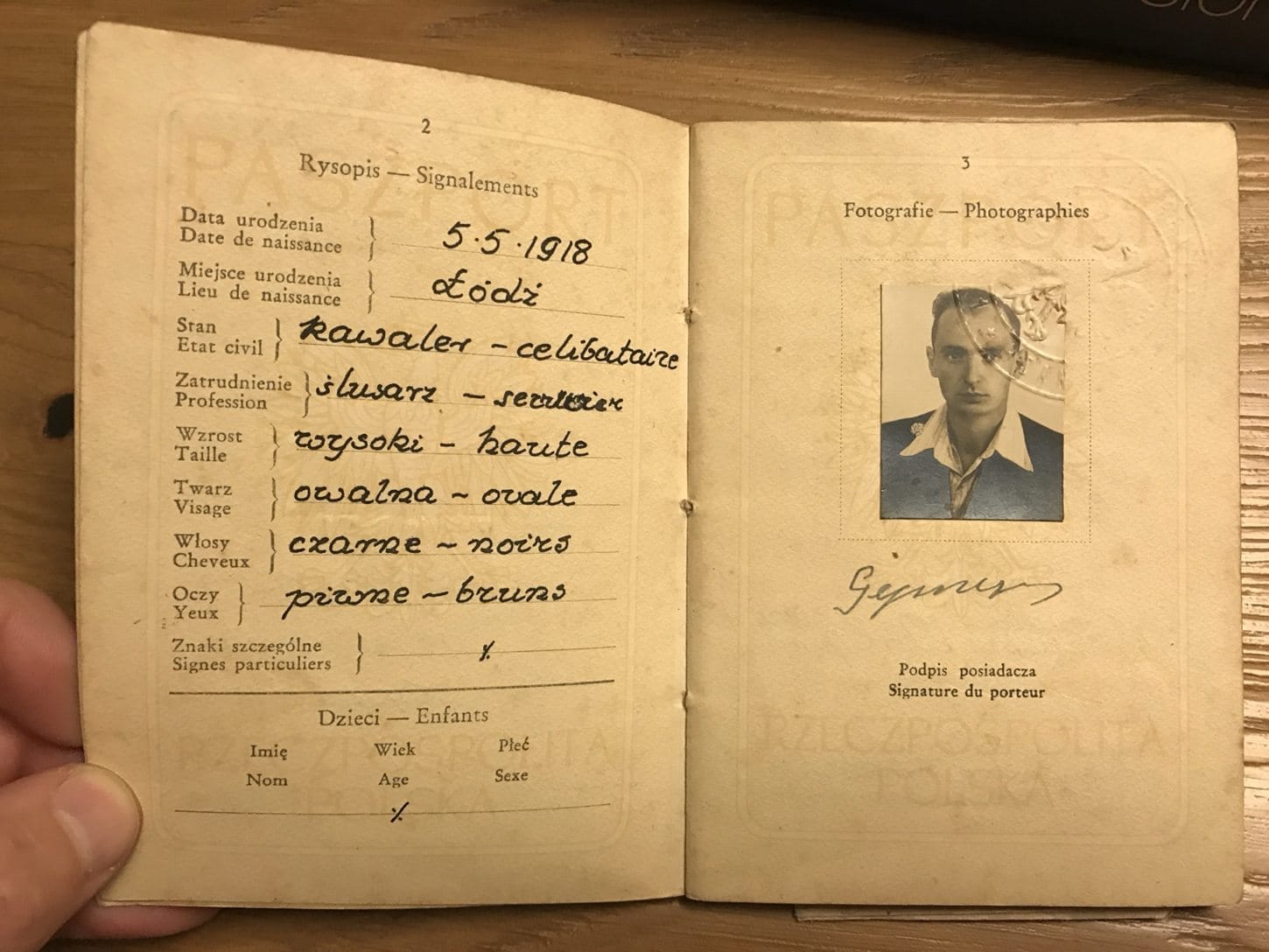
Son of Avraham Yitzhak (family knowledge) · holder of the 1948 emigration passport
אברהם יצחק העפנער
Son of Israel David. Died 9 December 1933 and buried at the Okopowa Street Jewish Cemetery in Warsaw, sector 73, row 30, grave 30. The Łódź ledger index places him, as Abram Icek, with a wife Gitla (born 1888) and children Hendla, Majer Chil, Moszek and Szyja.
ישראל דוד
Born 1855 in Żelechów, son of Abram. The Łódź population register of 1916–1921 lists him as a widower at Skwerowa 16 with three children born in Łódź — Fajga, Chawa/Ewa and Binem, the names the family knows as Avraham Yitzhak's siblings — and a pencil note records his departure for Warsaw in June 1920.
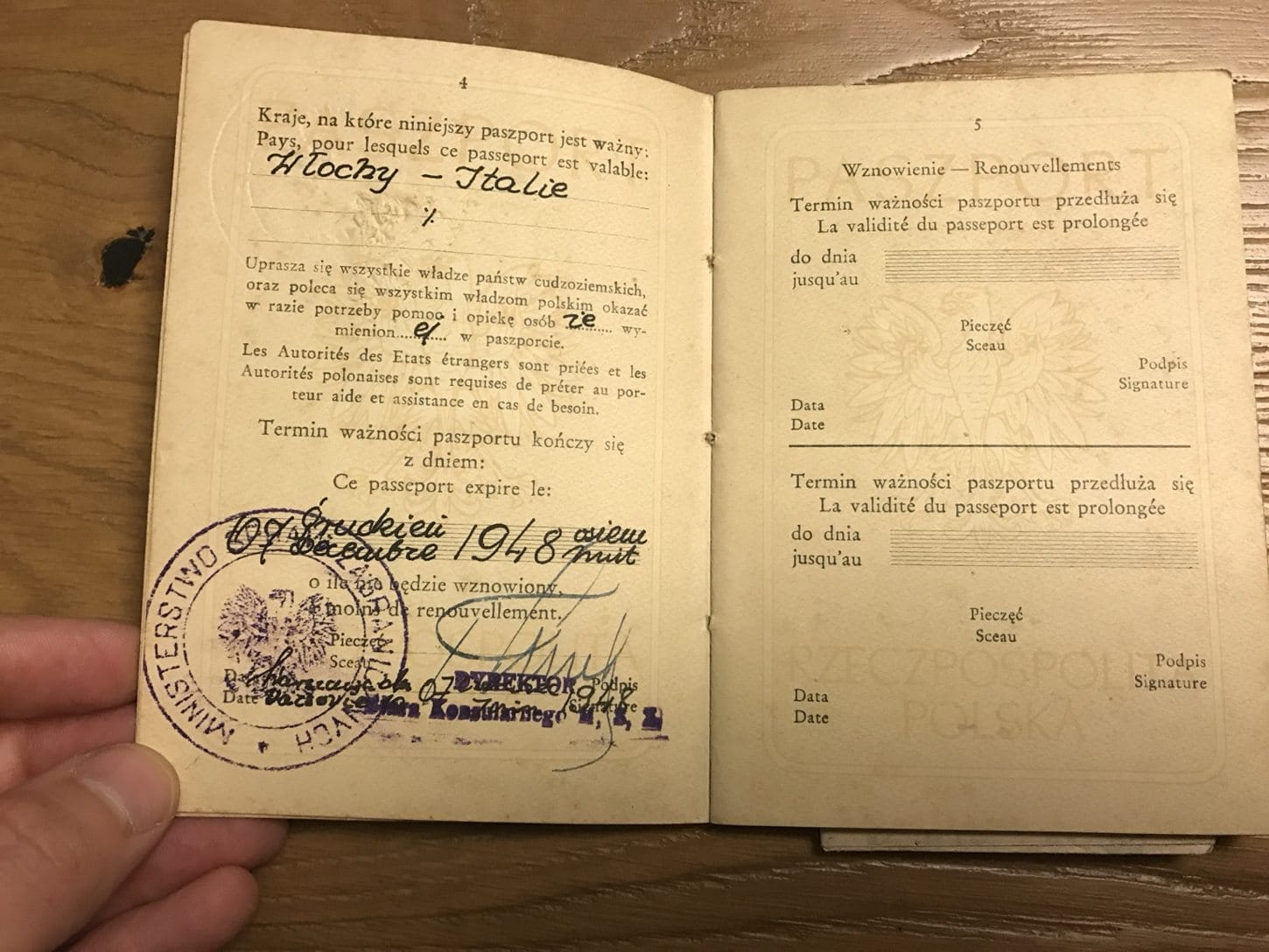
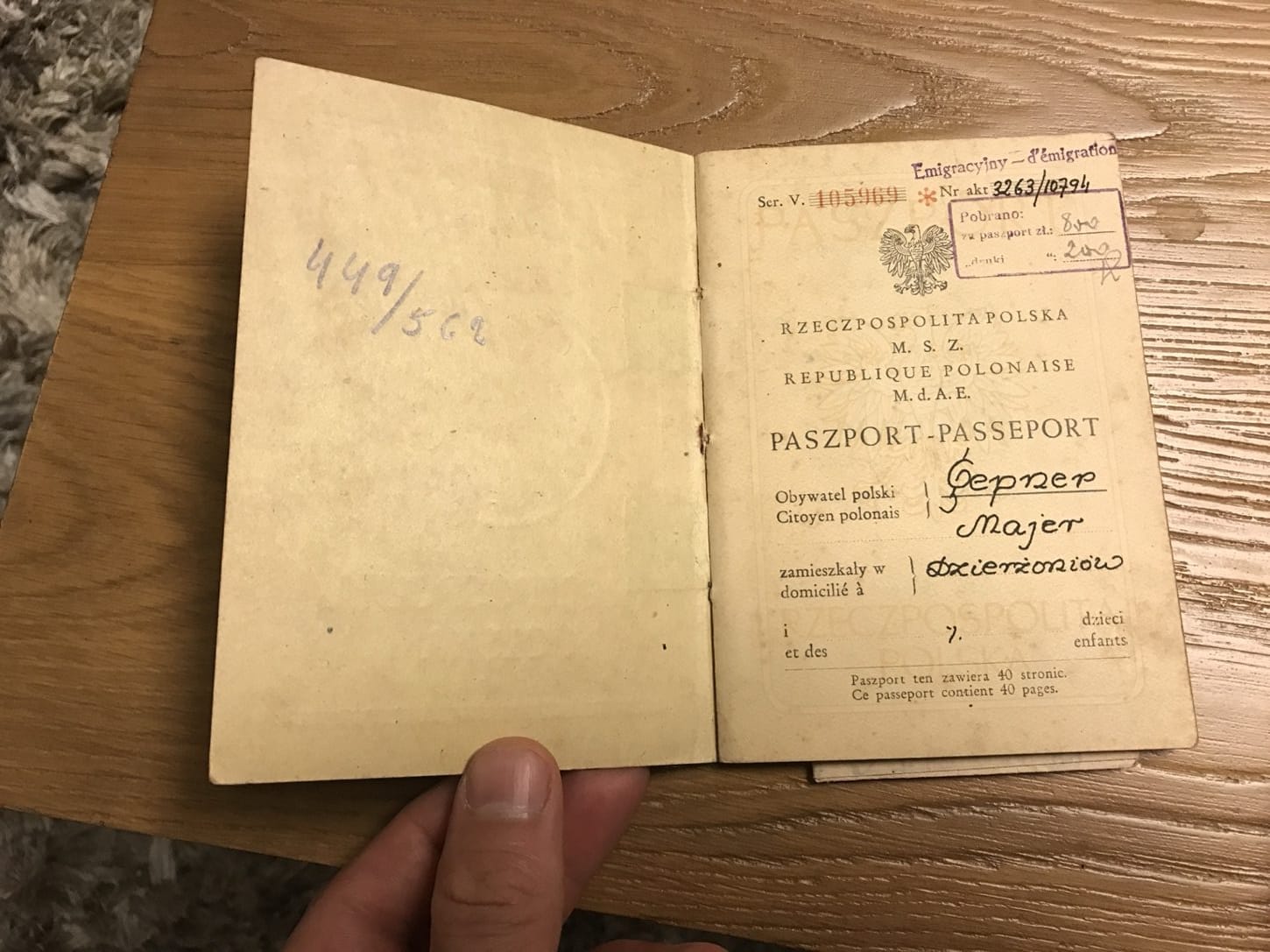
Born 5 May 1918 in Łódź, the eldest son; his sister Henia (born 1916) and brothers Moshe and Yehoshua survived the war. His postwar Polish passport records residence in Dzierżoniów and validity for travel to Italy in 1948.
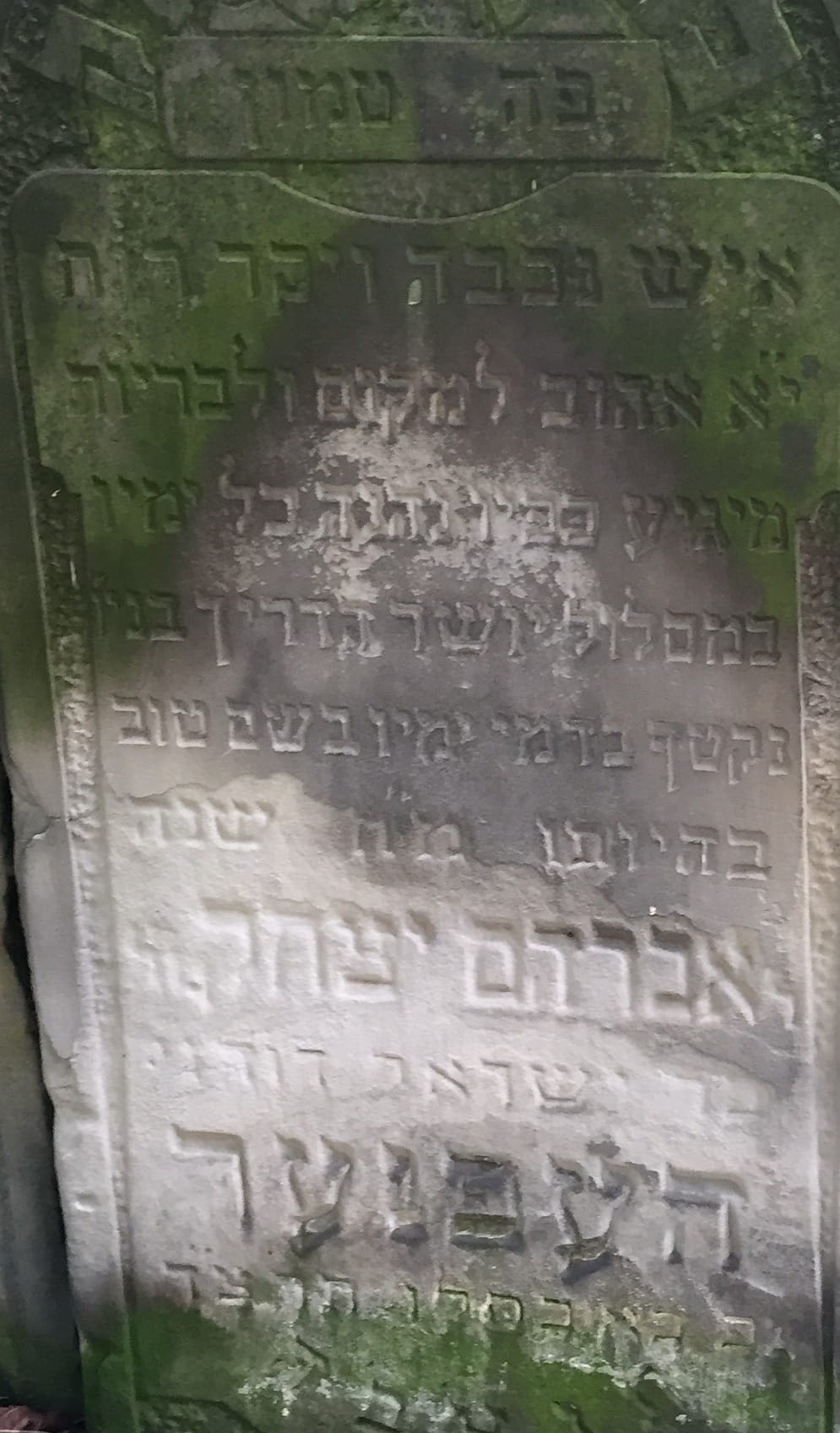
Everything documented about Avraham Yitzhak begins with this stone. It gives his name, his father's name, his priestly descent, the date of death — and, in a damaged line, his age.
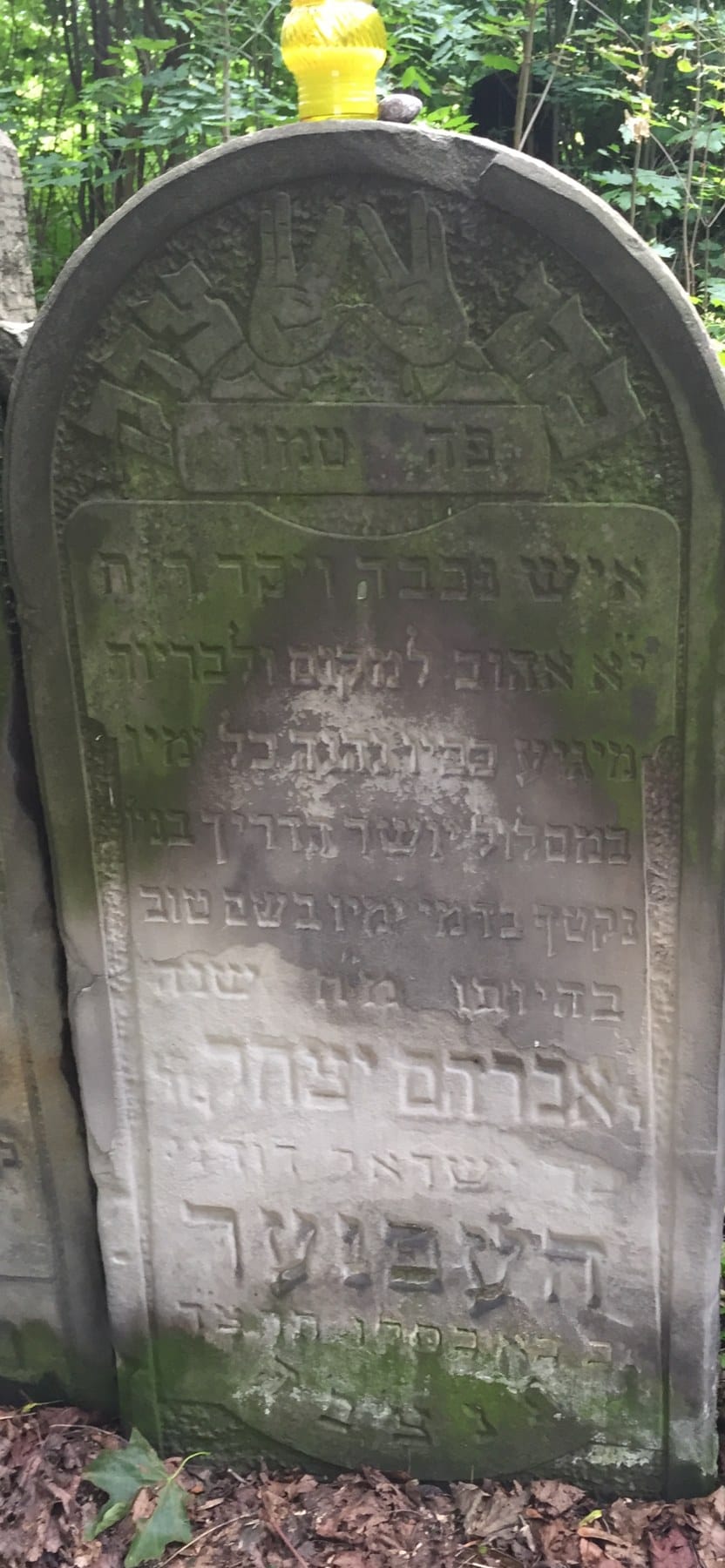
השם הוא אברהם יצחק העפנער, והוא מתואר ככהן צדק, כלומר כהן. שם אביו הוא ישראל דוד. תאריך הפטירה מתאים ל־9 בדצמבר 1933. נוסח המצבה מציין שנפטר בדמי ימיו. באזור הגיל האבן פגועה, ולכן הקריאה היא כנראה מ״ח, 48, או מ״ה, 45.
| Name in database | Hefner, Avraham Yitzhak |
|---|---|
| Father | Israel David |
| Date of death | 9 December 1933 |
| Cemetery | Jewish Cemetery, Okopowa Street, Warsaw |
| Location | Sector 73, row 30, grave 30 |
| Symbols | Priestly hands; described as כהן צדק, the usual honorific for a Kohen |
Strong candidate for Avraham Yitzhak's father
The Łódź population register compiled under German occupation in 1916–1921 holds a card for an Izrael Dawid Hepner whose name, generation, home town and later move to Warsaw all fit the father named on the gravestone. The volume (Henkel – Herc) was read in full; the cards that bear on the family are reproduced below.
Spis ludności Łodzi, 1916–1921 · volume Henkel – Herc · Archiwum Państwowe w Łodzi · fonds Akta miasta Łodzi · 39/221/0/4.12/24657 · 314 scans · Szukaj w Archiwach, unit 6209045
| Nazwisko · surname | Heppner — written with two p's on the card; the archive's index normalises it to Hepner |
|---|---|
| Imię · given names | Izrael Dawid |
| Imię ojca · father | Abram |
| Stan lub zawód · status | wdowiec — widower |
| Urodzony · born | 1855 w Żelechowie — in Żelechów |
| Ziemi · county | p. Garwoliński — Garwolin county |
| Wyznanie · religion | mojż. — Mosaic (Jewish) |
| Przynależność państwowa | polska — Polish |
| Stały mieszkaniec · permanent resident of | Żelechowa — Żelechów |
| Mieszkanie · address in Łódź | Skwerowa 16, district VIII; a later line reads Benedykta 42 |
| Uwagi · pencil note | „… VI 20 … do Warszawy” — to Warsaw, June 1920 (day partly legible) |
| Name | Born | Place | Family knowledge |
|---|---|---|---|
| Fajga Fela H. | 1 V 1900 | Łódź | Known as Fajga, a sister of Avraham Yitzhak |
| Chawa Ewa | 14 VII 1895 | Łódź | Known as Chawa / Ewa, a sister of Avraham Yitzhak |
| Binem, Beno | 1896 | Łódź | Known as Binem, a brother of Avraham Yitzhak |
Fajga, Chawa/Ewa and Binem are exactly the names the family knows as the siblings of Avraham Yitzhak — Eli Gafner, Majer's son, found this card independently on 7 September 2026 and made the match. That is the strongest reason to read this as his father's household. Avraham Yitzhak himself is not on the card; as an adult of about thirty he would have had a card of his own. A pencil note beside the family rows reads „… do Lublina” (to Lublin) with a date like 28 II 19…; which member it refers to is not clear.
Family knowledge: Eli Gafner, son of Majer Gepner, message of 7 September 2026.


Before the 1916–1921 census cards, Łódź kept Russian-era ledgers of permanent residents by house number. Their volunteer name index places the whole family — both generations — in three volumes. Only the index has been read: each scan is a double-page spread in Russian handwriting, and the public thumbnails are too small to transcribe.
| Volume | Names in the index |
|---|---|
| Księga ludności stałej m. Łodzi, houses 752–759APŁ 39/221/0/3.2.3/10109 · 563 cards on 287 spreads · „Kniga postoyannago narodonaseleniya g. Łodzi” | Srul DawidHendla (1858–1914)Abram IcekAbram IcykGitla (1888-)Hendla (1916-)Majer ChilMoszekSzyjaSymcha BinemChana FajgaChawaHendla (1923-)Gitla (1880-)Sura SimaChaja MałkaEsteraAbram BerAron HerszZyslaRywka |
| Księga ludności stałej Łódź, circuit III, houses 741–794624 spreads · the earlier ledger for the same houses | Srul DawidHendlaAbram IcekGitlaEsteraSura Sima |
| Kniga postoânnago narodonaselenìâ (Łódź)570 spreads | Symcha BinemChawa |
Probable — index and family knowledge; pages not yet read
The ledger index lists names without saying who belongs to which entry; the groupings above follow the 1916–1921 cards and the family's own knowledge. Abram Ber, Aron Hersz, Sura Sima, Chaja Małka, Zysla, Rywka, Estera, a second Gitla (born 1880) and a second Hendla (born 1923) are also in the book and are not yet placed. Everything here is provisional until the pages themselves are read.
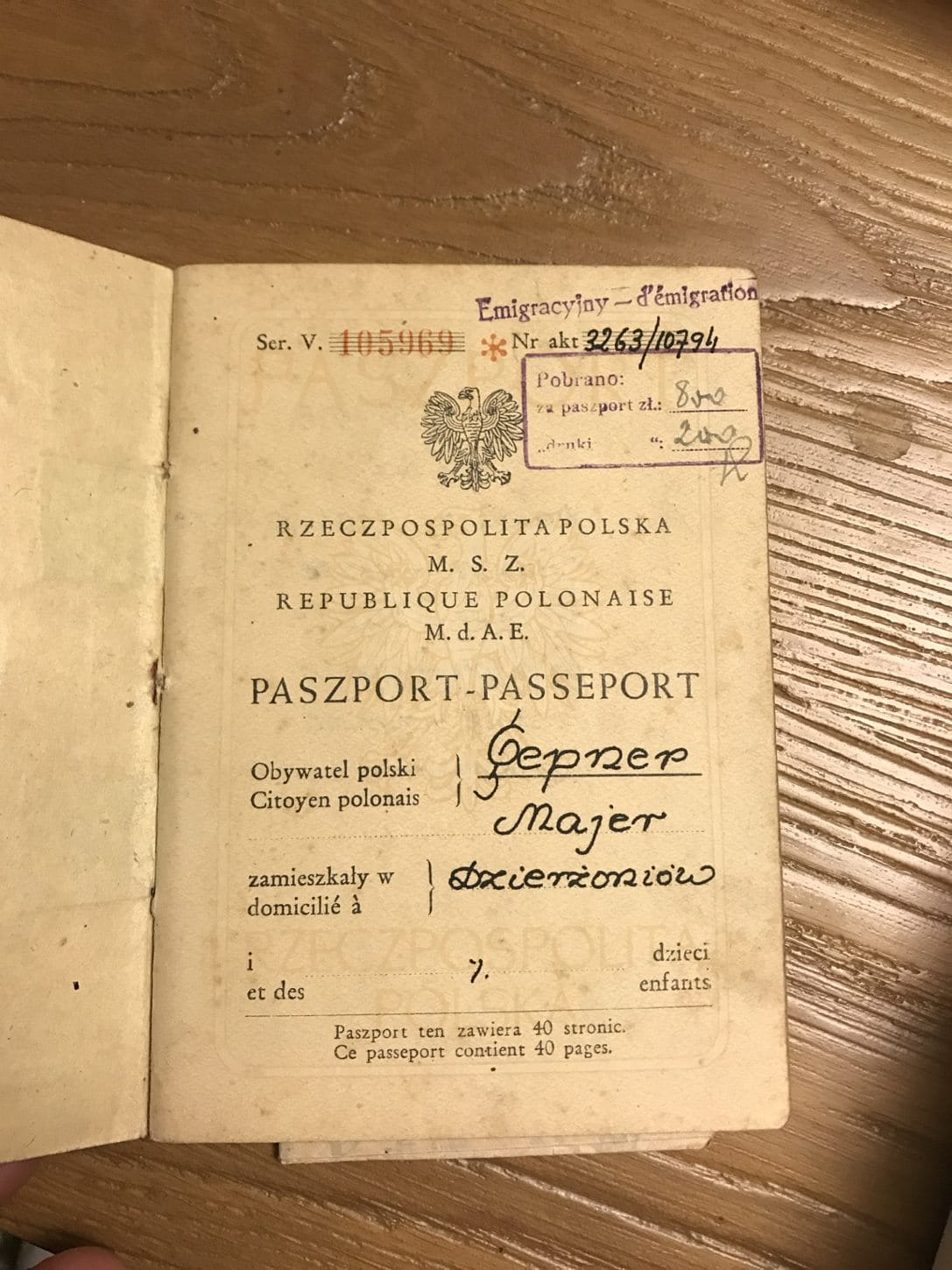
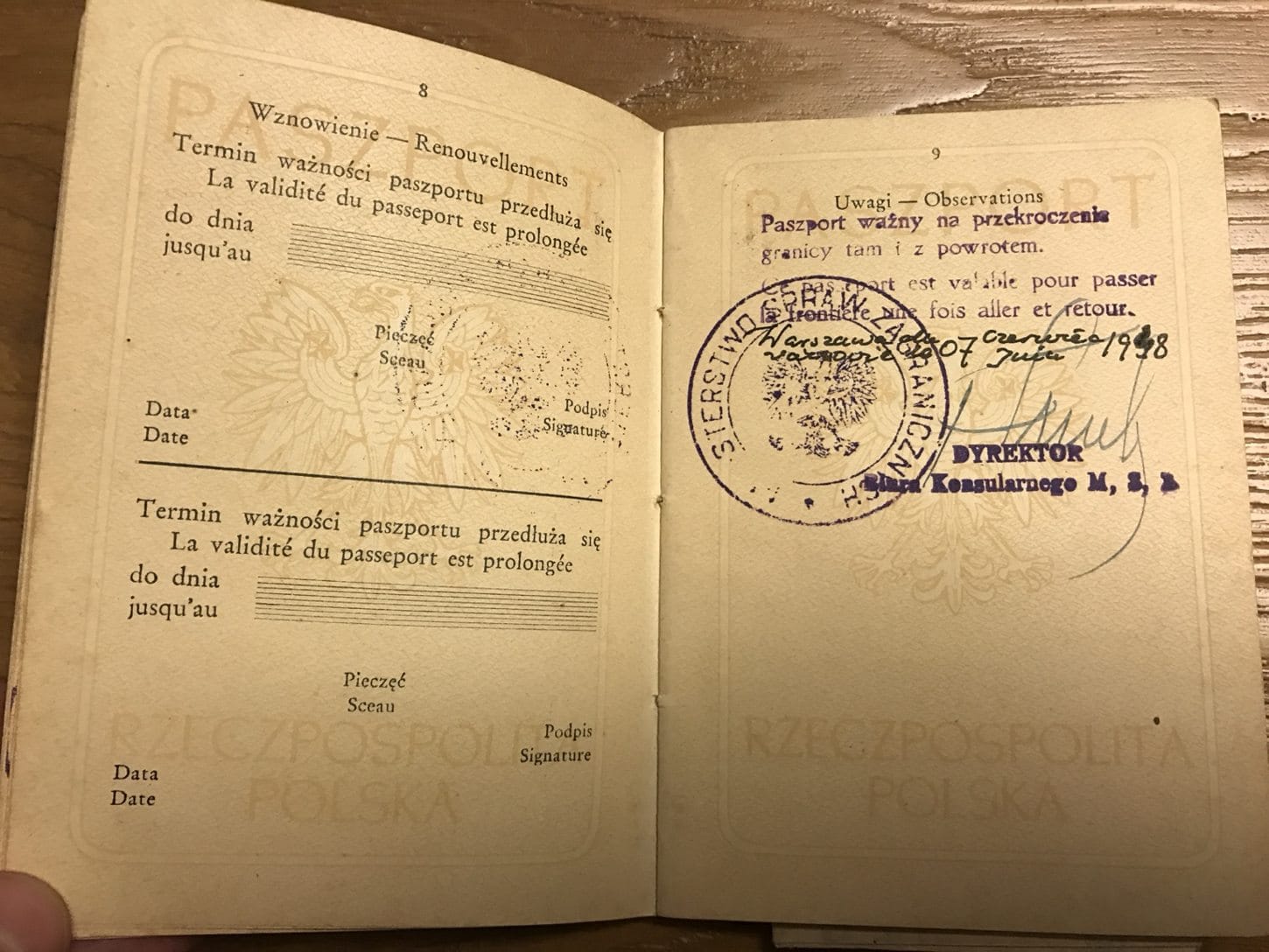
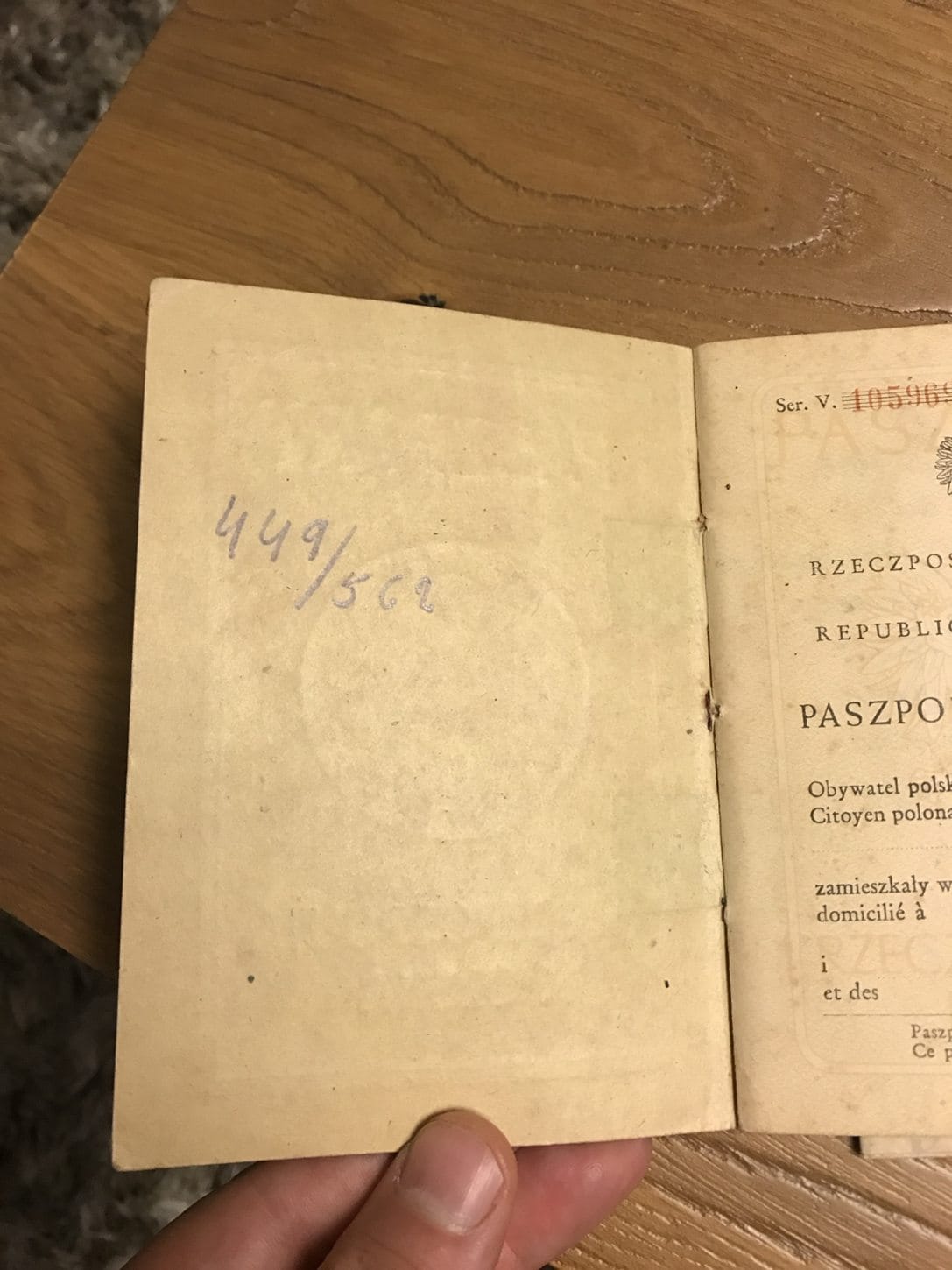
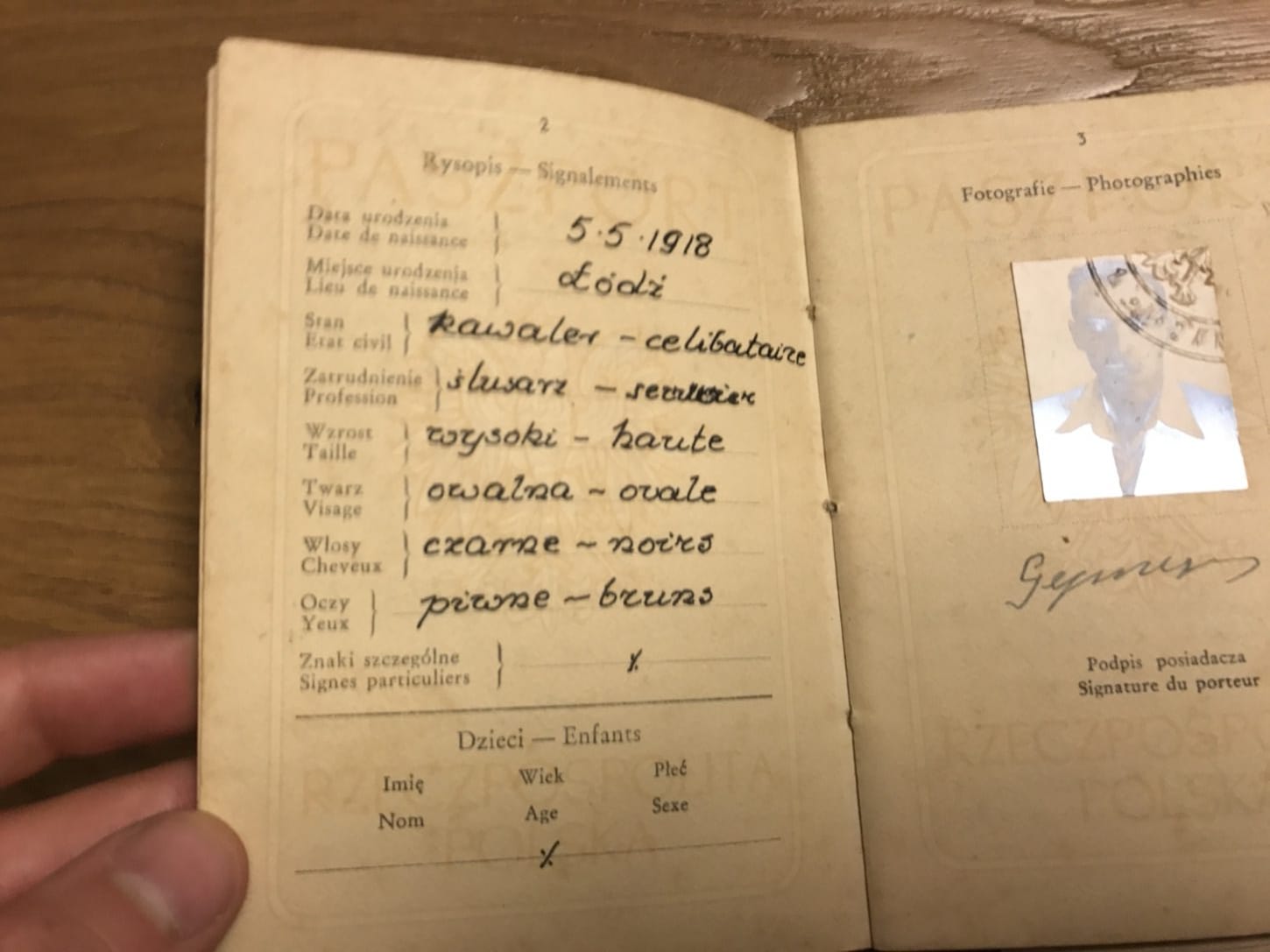
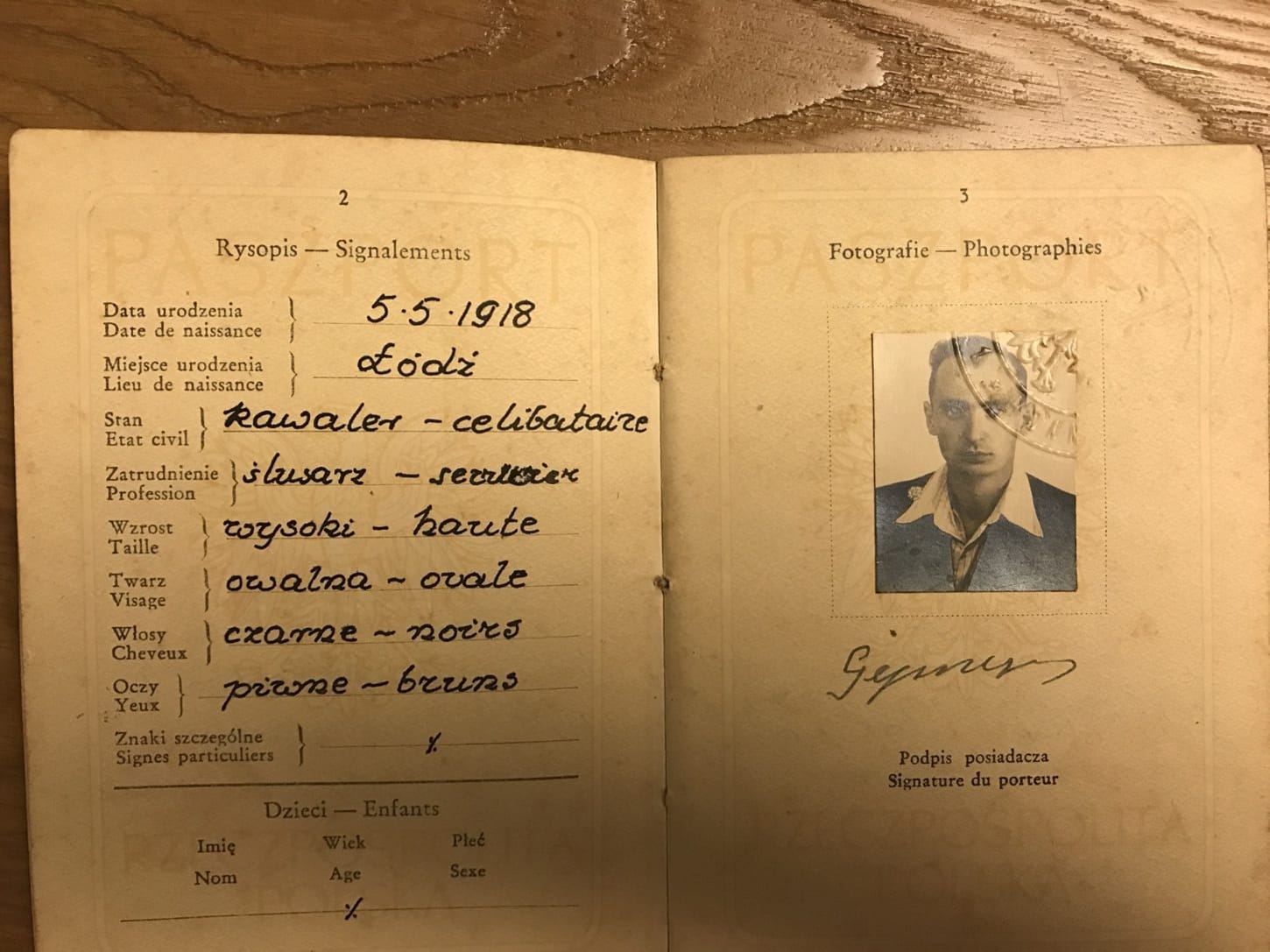
The family holds Majer Gepner's original postwar Polish passport. The photographs below are the family's own; the transcriptions are read directly from the pages.
| Name | Majer Gepner |
|---|---|
| Date of birth | 5 May 1918 |
| Place of birth | Łódź |
| Civil status | kawaler / célibataire — unmarried |
| Profession | ślusarz / serrurier — locksmith, metalworker |
| Residence | Dzierżoniów |
| Description | Tall (wysoki), oval face, black hair, brown eyes |
| Children | None recorded |
| Emigration file no. | 3263/10794 |
| Valid for | Italy — Włochy / Italie |
| Period | Passport and official stamps from 1948 |
Ser. V. 105969 · Nr akt 3263/10794 · stamped „Emigracyjny – d'émigration” · Pobrano: za paszport zł 800, druki 200Series V no. 105969, file 3263/10794, marked as an emigration passport; fees of 800 zł for the passport and 200 zł for forms.Kraje, na które niniejszy paszport jest ważny: Włochy – Italie · Termin ważności paszportu kończy się z dniem 07 grudnia 1948, o ile nie będzie wznowionyValid for Italy; validity ends 7 December 1948 unless renewed. Ministry of Foreign Affairs stamp dated Warsaw, 7 June 1948.Paszport ważny na przekroczenie granicy tam i z powrotem · Warszawa, dnia 07 czerwca 1948 · Dyrektor Biura Konsularnego M.S.Z.Valid for crossing the border there and back; Warsaw, 7 June 1948; signed by the director of the consular bureau of the Ministry of Foreign Affairs.Select any page to view it at full size. Three photographs were taken sideways and are shown rotated; the originals are kept unaltered in the archive.
The same family name appears in four scripts across the records, and each system spelled it its own way. Every form has to be searched separately.
| Language · system | Spelling | Notes |
|---|---|---|
| Hebrew · family usage | העפנער / הפנר | Seen on the gravestone and in family discussion. |
| Yiddish | געפנער | The form the family remembers from the Russian period. |
| Polish · Latin script | Hepner, Heppner, Hefner, Gepner, Giepner, Hegner | Every variant has to be searched independently. Izrael Dawid's own card is written Heppner while the archive index says Hepner; the same register writes one man as „Gepner Hepner” (scan 115) and files the Gepner cards among the Hepners. |
| Russian | Гепнер / Гефнер | Russian often rendered a foreign H with Г, which later transliterates back as G. |
The alternation between H and G was already normal in Polish records: the Łódź population register of 1916–1921 interfiles Gepner and Hepner cards and, on Icek's address card, writes both spellings for one person. That makes it entirely plausible that an older Hepner line reappears after Soviet documentation as Gepner, although a document tying Majer's own Gepner to a Hepner parent has not yet been found.
Żelechów, a small town in Garwolin county south-east of Warsaw, is currently the strongest geographic hypothesis for Avraham Yitzhak's birth. The reasons are cumulative rather than conclusive.
Żelechów Yizkor material: JewishGen Żelechów Yizkor Book
What the family remembers, written down as told. None of it is treated as fact until a record confirms it — but each memory points at a document, and one of them has already been matched by the gravestone.
Majer was born in a village called Łazy, not far from Warsaw, where Avraham Yitzhak had a farm or was a partner in one. The family visited the village on its trip to Poland.
Open — conflicts with the passportAmir Gafner, from family stories
Majer's 1948 passport gives Łódź as his birthplace. Both can be true only if the passport names the registration town rather than the birthplace, or if the family lived at Łazy after his birth. There are many villages called Łazy; the one the family visited has not yet been fixed on the map.
Majer's birth act (Łódź, 5 May 1918, or a delayed registration); the 1921 census returns or land records for the candidate Łazy.
Avraham Yitzhak grew and traded vegetables.
OpenAmir Gafner, from family stories
A 1930 Warsaw address directory lists „Hepner Abr., handl., Dzika 38” — a trader (handlarz) of that name. Whether this is our Avraham Yitzhak is not yet proven.
The 1933 Warsaw death act (occupation and address); Warsaw trade registers; the directory entry's telephone subscriber file.
He moved the family to Warsaw so that Majer, his eldest son, could study in a cheder with a bigger rabbi.
OpenAmir Gafner, from family stories
Dzika 38 — the address in the 1930 directory — housed three cheders with about 133 boys in the 1930/31 school year, according to the research notes. The move would fall between Majer's birth in 1918 and 1930. Izrael Dawid, the probable grandfather, had gone to Warsaw in June 1920.
Warsaw registration or kehilla school records for Dzika 38; the death act's address line.
Avraham Yitzhak died when Majer was about fourteen.
Matches the gravestoneAmir Gafner, from family stories
The stone and the cemetery record give 9 December 1933; Majer, born 5 May 1918, was fifteen and a half. Memory and record agree within a year.
Already settled by the gravestone.
Majer's mother is a mystery. Her name may have been Gitla. After her husband's death she was left alone with many children and „left” — perhaps she was hospitalised.
Probable — a Gitla is in the Łódź indexAmir Gafner, from family stories
The Łódź permanent-population book for houses 752–759 lists a Gitla Hepner born 1888 in the same volume as Abram Icek — the right age for his wife. Her fate after 1933 is still unknown.
The ledger page itself; the marriage record; Majer's birth act; the widow line of the 1933 death act; Warsaw hospital admission books after 1933.
Majer had an older sister, Henia, who survived Auschwitz, reached Sweden and then Israel, where she reunited with her brothers: Majer, Moshe — who went to Israel and later to Brazil — and the youngest, Shea (Yehoshua), who lived in Haifa.
Probable — matches the Łódź indexAmir Gafner, from family stories
The same ledger index lists Hendla Hepner born 1916 — Henia, two years older than Majer and named after her grandmother Hendla who died in 1914 — together with Moszek and Szyja. Four names remembered, four names in the book.
The ledger pages; Łódź birth acts for 1916 and after; Henia's Auschwitz, Swedish and Israeli records.
Henia was older than Majer but not the eldest: another sister — her name may have been Chana — was already married and living in Łódź with a family of her own. After the parents died, her husband took Majer to work for him installing radios: climbing onto rooftops to fit the aerials for the sets in the flats below.
Open — fits the Łódź ID-card registersAmir Gafner, from Majer's own stories
„After the parents died” implies Gitla also died, in or after 1933. The Łódź ledger index has an unplaced Chaja Małka Hepner (a Chana Fajga, born 1900, is Majer's aunt). The Łódź municipal identity-card registers of the 1930s are tagged with Majer Chil, Moszek, Symcha and a „Chendla” Hepner — the family back in Łódź, as the story says.
The ID-card register entries (units 9645124 and 9645125), which give birth date, address and occupation; the ledger pages; Gitla's death record.
Henia introduced her best friend from Auschwitz, Rachel Guttman of Warsaw, to her brother Majer. They married; Rachel is the writer's grandmother.
Family knowledgeAmir Gafner, direct family knowledge
Majer's 1948 passport still shows him unmarried, so the marriage came after the emigration passport was issued.
Not a research question; noted so the Guttman line can be added later.
The family were Hasidim. A paternal relative remembers that an ancestor — roughly „grandfather's grandfather” — was connected to Kotzk.
Open — geography fitsEli Gafner (Majer's son); the exact rebbe the family followed is not remembered
Kock (Kotzk) lies 42 km from Żelechów, inside the same Przysucha family of courts as the town's own mid-century rebbe. See the next section.
Obituary notices in the Warsaw Yiddish press, 10–13 December 1933, which often name the shtibl; the Żelechów yizkor book's chapter on the town's Hasidic circles; Okopowa burial-society records.
Majer was in the USSR during the war, and there the surname was written and pronounced Gepner.
PlausibleFamily memory; the 1948 passport already reads Gepner
Russian regularly renders a foreign H as Г, and the Łódź register shows Gepner and Hepner used for the same people before the war.
Soviet wartime records under Гепнер / Гефнер, Майер / Меер; postwar Dzierżoniów and Central Committee of Polish Jews registers.
The family knows it was Hasidic and remembers Kotzk, but not the rebbe it followed. The town itself gives the strongest hints: Żelechów sat inside one particular family of Hasidic courts, and every one of them was a day's journey away.
Żelechów was a Hasidic town from the movement's first generation. Levi Yitzchak of Berditchev (1740–1809), a disciple of the Maggid of Mezritch, served as its rabbi in the early 1770s after Ryczywół and before Pinsk and Berdichev, and met fierce opposition there from the Mitnagdim — the town was contested ground before it was Hasidic ground.
In the middle of the nineteenth century Żelechów had a rebbe of its own: Yehoshua Asher Rabinowicz (1798–1862), son of the Holy Jew of Przysucha, held court in the town before moving it to Parysów, 24 km away. The Przysucha school is the one from which Kotzk grew — Menachem Mendel Morgenstern was the Holy Jew's and Simcha Bunim's disciple — so a Żelechów family of the 1840s and 1850s lived inside the same family of courts whether it prayed with the town's rebbe or travelled to Kock.
Kock is 42 km to the south-east. The Kotzker settled there in 1829 and died in 1859; most of his followers then went to Yitzchak Meir Alter, the Chiddushei HaRim, whose court at Góra Kalwaria (Ger), 51 km to the west, became the largest in Poland. A smaller Kotzk line continued under the Kotzker's son David in Kock and later at Puławy (Pilov) and Sokołów, and his son-in-law Avraham Bornsztain founded Sochaczew. A family that remembers „Kotzk” could, by the 1920s, have belonged to any of these — or to a Kotzk-minded shtibl in Warsaw.
The Żelechów yizkor book (1953) has a chapter, in Yiddish, on the town's Hasidic circles, and another on „the rebbe's yard”. It is the natural place to learn which shtiblekh existed in the town in the years Izrael Dawid and his children lived there, and it has not yet been read for this research.
Kock, Puławy or Sokołów. Geography favours it for the Żelechów generation; a Warsaw shtibl of the Sokołów rebbe existed in the interwar years.
The most common outcome for Kotzker families after 1859. In Warsaw of the 1920s and 1930s Ger had by far the most shtiblekh.
The town's own rebbe's line, later in Parysów and Warsaw; a family may have kept the affiliation after moving.
The memory may attach to where the family prayed in Warsaw rather than to a court it travelled to.
„Rabbi”, „rebbe” and „shtibl” are not the same thing. A rabbi was a halakhic authority with a communal appointment; a rebbe was a Hasidic leader accepted by followers, usually by descent by the late nineteenth century; a shtibl was a prayer room of one court's followers. Interwar Warsaw had hundreds of shtiblekh, and many small courts had only a few. The family's memory could attach to any of the three levels.
The questions that remain open have specific sources attached to them. These are the collections most likely to close them, in priority order.
Szukaj w Archiwach units 6208176 (287 scans), 6207971 (624) and 6207986 (570) · Archiwum Państwowe w Łodzi
The index already places both households in these books. The pages would give Abram Icek's birth date and birthplace, Gitla's maiden name and parents, the children's birth dates, and the family's moves — in one stroke. The scans must be downloaded at full resolution from the viewer („Pobierz”); the public thumbnails cannot be read.
Szukaj w Archiwach units 9645124 and 9645125 (Zarząd Miejski w Łodzi, zespół nr 3, surnames Ch–Ł) · also 9645117
Tagged with Hepner, Majer Chil; Hepner, Moszek; Hepner, Symcha; Hepner, Chendla; and Hepner, Srul Szyja. An identity card was issued at eighteen, so these would be the siblings in Łódź between about 1934 and 1939 — with birth dates, addresses and occupations, including, if the story is right, Majer as a radio installer.
USC Łódź (Jewish) · Archiwum Państwowe w Łodzi · indexed in JRI-Poland
The Łódź register shows Izrael Dawid's children Chawa Ewa (14 VII 1895), Binem (1896) and Fajga Fela (1 V 1900) were born in Łódź. Their birth acts would name their mother — Izrael Dawid's wife, who had died by 1916–1921 — and confirm the father's full name. The same series should be searched for an Abram Icek / Izaak Hepner born 1884–1888 with father Izrael Dawid.
USC Łódź (Jewish), or Żelechów · JRI-Poland — Geneteka's Łódź index has neither
The birth act names both parents and would document the Avraham Yitzhak → Majer link, give Majer's mother's name (the family remembers „Gitla”), and show whether the family was already written Gepner. Avraham Yitzhak's marriage, probably 1905–1917, would name his father outright. Geneteka's index of Łódź Jewish marriages 1900–1920 has no Abram Icek Hepner, so the JRI-Poland index and the registers themselves must be checked.
The death act may settle the 45-versus-48 question and should give birthplace, address, occupation, the widow's name and the informants — three family memories at once.
Haynt · Der Moment · Dos Yidishe Togblat · Nasz Przegląd — Polona and the CBJ digital libraries
Death notices often name the deceased's shtibl or rebbe, his children and his address. This is the most direct route to the Hasidic affiliation the family no longer remembers.
78/162/0 · Akta miasta Żelechowa · Warsaw State Archive, Otwock branch
Izrael Dawid remained a permanent resident (stały mieszkaniec) of Żelechów even while living in Łódź, so the Żelechów books may still carry his household — including a son born around 1885 — with dates and places of birth and departures.
„Di khsidishe krayzn in Zshelekhov”, I. Wajnberg, p. 141 (Yiddish) · Warsaw kehilla records
Which shtiblekh existed in Żelechów in the 1850s–1890s, and which Hasidic houses of prayer stood near Dzika 38 in the 1930s. Together with the obituaries this would narrow „Kotzk” to a court.
72/3190/0 · extends through 1939
A key candidate for a court copy of the 1933 death act. The collection is not digitised at unit level, so it has to be requested.
39/221/0/4.12 · other volumes
The Henkel–Herc volume has no card for an Abram or Abram Icek Hepner or Gepner, so Avraham Yitzhak was not registered in Łódź under those spellings in 1916–1921 — consistent with a household already elsewhere. Hefner would fall in an earlier volume. Mojżesz Hepner's seven children and Izrael Dawid's three are the next generation's cousins; their later cards may lead to Majer's parents.
JRI-Poland / JOWBR — Bracka Street cemetery index, login required
Warsaw's Okopowa and Bródno databases and the Żelechów list have been searched without result. The Łódź cemetery index is the remaining online source: Hendla's 1914 burial should be there, and Izrael Dawid's if he was brought back from Warsaw.
The family visited the village on its trip to Poland. The trip's photographs or notes, then the 1921 census and land records for that Łazy, would show whether a Hepner farmed there. Warsaw's own interwar residents' registers were largely destroyed in 1944, so the village records matter more than usual.
Żelechów exists as a research town in JRI-Poland, but its public town page was not reliably accessible during this research. Birth years 1877, 1885 and 1888 should be checked under Hepner, Heppner, Hefner, Gepner, Giepner and Hegner, with father Israel, Srul or Dawid.
Every claim on this page, with the reason for its status.
| Claim | Status | Reason |
|---|---|---|
| Avraham Yitzhak was the son of Israel David | Confirmed | Stated on the gravestone and in the cemetery record. |
| Avraham Yitzhak died 9 December 1933 in Warsaw and is buried at Okopowa | Confirmed | Cemetery database and gravestone. |
| The age on the gravestone is 48 | Probable | Weathered inscription; the visual reading favours מ״ח, but it is not certain. |
| Avraham Yitzhak was born around 1885 | Probable if age = 48 | Derived from the probable gravestone age. |
| Izrael Dawid Hepner, born 1855 in Żelechów, son of Abram, lived in Łódź as a widower with children born there in 1895, 1896 and 1900 | Confirmed | His card in the Łódź population register, 1916–1921 (scan 118). |
| Izrael Dawid left Łódź for Warsaw in June 1920 | Probable | Pencil note „do Warszawy” with a June 1920 date on the card; the day is only partly legible. |
| The Izrael Dawid Hepner born 1855 is Avraham Yitzhak's father | Strong hypothesis | Exact rare name, compatible generation, moved to Warsaw — but no direct father–son document yet. |
| Mojżesz Hepner, born 1877 in Żelechów, son of Izrael, is a son of Izrael Dawid | Strong hypothesis | Same town, same county, father's name Izrael, generation fits (scan 133); the card gives only „Izrael”, not „Izrael Dawid”. |
| Avraham Yitzhak was born in Żelechów | Working hypothesis | The candidate father and his probable son Mojżesz were both born there; the family was in Łódź by 1895, so a birth around 1885–1888 could fall in either place. No birth act found. |
| Icek Hepner, born 1886 in Radogoszcz, is Avraham Yitzhak | Disproven | His father is Wolf, not Israel David (Łódź register, scans 115 and 123). |
| Hepner and Gepner were used for the same people in Łódź | Confirmed | Icek's address card is headed „Gepner Hepner”, both spellings for one man (scan 115). |
| Majer Gepner was born 5 May 1918 in Łódź | Confirmed | Original passport. |
| Avraham Yitzhak died when Majer was about fourteen (family memory) | Matches the record | Gravestone and cemetery record: 9 December 1933, when Majer was fifteen and a half. |
| Majer was born in a village called Łazy near Warsaw, where Avraham Yitzhak farmed | Open | Family memory. The 1948 passport gives Łódź; which of the many villages called Łazy is meant is not fixed. |
| Avraham Yitzhak traded vegetables and moved to Warsaw so Majer could study in a cheder | Open | Family memory. A „Hepner Abr., handl.” at Dzika 38 in the 1930 Warsaw directory, an address with three cheders, is consistent but not yet shown to be him. |
| Majer's mother was named Gitla and was left with many children after 1933 | Open | Family memory only; no marriage, birth or death record naming her has been found. |
| The Hepners were Kotzker Hasidim | Open | Family memory (Eli Gafner). Kock is 42 km from Żelechów and the town's own rebbe came from the same Przysucha school, so the geography fits; no record names the family's shtibl. |
| Hepner became Gepner through Russian Гепнер | Plausible | Consistent with Russian transliteration and family memory; the Łódź cards show the alternation already existed in Polish records. |
Izrael Dawid Hepner is born in Żelechów, son of Abram (Łódź register card).
Mojżesz Hepner, son of Izrael, is born in Żelechów — probably Izrael Dawid's eldest known son.
Probable birth window for Avraham Yitzhak, depending on whether the weathered gravestone age is 48 or 45.
Chawa Ewa, daughter of Izrael Dawid, is born in Łódź — the family is in Łódź by now.
Fajga Fela, daughter of Izrael Dawid, is born in Łódź (a son, Binem, was born there in 1896).
Hendla Hepner, Izrael Dawid's wife, dies in Łódź (ledger index; page not yet read).
Hendla — Henia — is born to Abram Icek and Gitla in Łódź and named after her grandmother (ledger index; family knowledge).
Majer Gepner's passport records his birth in Łódź.
Family memory places Majer's birth and early years in a village called Łazy near Warsaw, where Avraham Yitzhak farmed and traded vegetables.
A pencil note on Izrael Dawid's Łódź card records his departure for Warsaw.
Fela Hepner, born 1896 in Żelechów to Aron and Estera Bina, registers in Łódź on arrival from Żelechów.
Family memory: the family moves to Warsaw so that Majer, the eldest son, can study in a cheder with a bigger rabbi.
A Warsaw address directory lists „Hepner Abr., handl., Dzika 38”, an address that housed three cheders — if this is Avraham Yitzhak.
Avraham Yitzhak Hepner dies and is buried at Okopowa, Warsaw.
Majer's Polish emigration passport is stamped in Warsaw: resident of Dzierżoniów, valid for Italy.